The OrphanAGE, Vol 1.33
First Lines
“Tell me about a complicated man.” ~ Homer, The Odyssey (2017 trans, Emily Wilson)
As the Flock controversy rages de jour, the curtain rises on our troupe of intrepid performers: a contingent of musicians joined by a lone poet are loading into a van, the sun not yet risen. Breathe easy, dear reader, an ample supply of snacky provisions has been laid in: Cheetos, chips, peanut M&Ms, the ‘honey roasted’ kind (don’t go there…). Journey’s end? Kentucky. Words of warning from J.R.R, Tolkien, re-visioned for our age, buzz in their collective ear: It's a dangerous business, Frodo, going out your door, there’s no knowing when you might be videoed and turned over to ICE…
The culmination of several years of on-again-off-again invitations from an, at first blush, unlikely host: Sune the Delightful Dane. Not too long ago a ‘dry’ county, set amidst the encircling hills of Kentucky horse country, Berea has for nearly two decades been the gathering place for an annual Celtic music soiree. Like Burning Man or Woodstock before it, a festival offers up a smorgasbord for the people-watchers. Getting to hang with Patrick D’Arcy, founding mandolinist of the Flogging Mollys and now an Uilleann piper of some note, was simply icing on the cake (a strange bookend to running into Nathan Maxwell, current Flogging Molly bassist, half way across the country in a front-range Irish pub half just a few weeks back).
Peace,
Dante
In This Issue
- Painting by Dee Washer
- Live music and poetry performance from Berea Celtic Fest
Walls that Carry Time
by Dee Washer
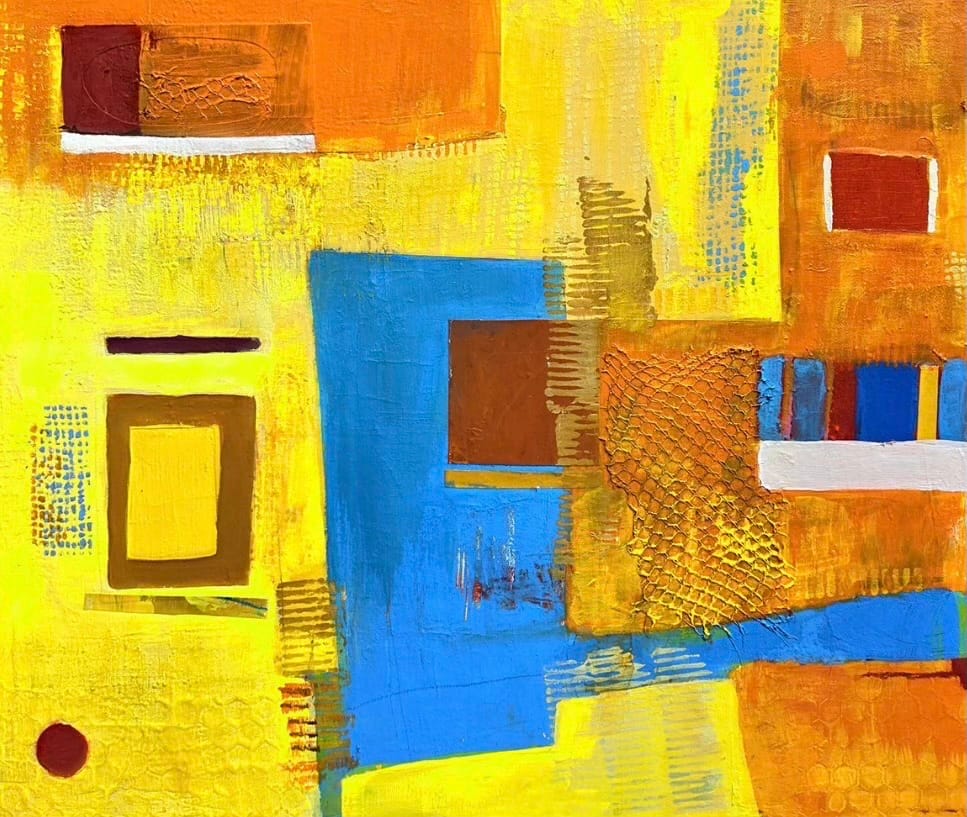
Shout out to Dee Washer on her 2026 juried Gallerium (Canada) win! You may find her work at her website.
Last Man Out
Poem composed and read by w.e. leathem
Accompaniment by Turlach Boylan and Friends, Karen Grotewohl, Laurel Morgan, and Will Vannerson performing Flatwater Fran, composed by Phil Cunningham
Will Leathem, Turlach Boylan and Friends at Berea Celtic Fest 8-15-2026
Dolly was the first
Well, she and
the men who away
never to return
She, in the flu of ’19.
The men, lost to
war, to the fish. Now,
sons too, gone chasing
work away south
or to the mainland.
Unlike their fathers before
them, no longer content
to go down in
ill-tempered seas.
Not much of a way
to grind out a living:
Crofter. Postman.
Occasional hand
at the Rona Light
Of Arnish, now,
by way of Glasgow
I, a Raasay man,
a wife and bairns
to see after,
to raise beneath
these Northern lights
You turn to your kin
when things need a doin’
and £70 paid out
by the council
sees one a long way
toward making ends meet
even when split
with one’s brother
It was the first time
we set our hand
to roadwork.
Three winters it took,
the laying down
from Torran to Fladda
That was ’56
and work only begun
ending too soon
in a farmer’s stony field
Not even voices
raised at the council
gathering could get it
going again, could see
it to a conclusion
more suitable for those
craving a way out
And the months,
all the years, even,
no clear end to a road
run out of steam,
its proper end, abandoned
to languish, unfinished
No more will they pay. Not even
to lay one further inch —
let alone the remaining
one-and-three-quarter miles
We are told
that most everyone, now,
has access already. Everyone
who wants it. Access
to the south, to the
shops and the ferry
that runs weekly out
and back again
No more funds,
we are told, tersely.
No grants to be had
This is the end of it!
Of the discussion
Of the road
In my prime
I thought about
Australia, Patagonia
of the sea and the going
to it. But, really
those were just
fancies, and there’s
plenty for a man
right here, close
to home
A book, a manual
really: Road Making
& Maintenance: A Practical
Treatise for Engineers,
Surveyors and Others
by a Thomas Aitkin,
come only today
by ferry. Left to wait
at the Queen’s post.
Left for me to make
my way back down,
by whatever means
I see fit. To cross the miles
from one end to the other
of the isle, to retrieve,
along with beans
and salted shank, a skein
of fabric for me wife,
a handful of letters —
a smattering, really
of what there use to be
To be carried back north,
back home to the far end,
past where the road I once
helped build ends
two miles shy
of its rightful ending
Forty families
stick it out, remain
to work the sea
and stony fields,
knowing full well
the cost of staying
All while pondering
the leaving
Here, when I’m not
turning earth or pulling
up fish, I sit of an evening
by peaty fire, thumb
these pages that made
the trip all this way
Think upon what’s written
herein — maybe the best
half crown I’ve ever spent.
What will happen
If I don’t? If’n I do?
A beginning of an end, postponed,
perhaps, by effort
of mine. Can I provide
a reason a way
for those down there,
who, happening upon some sense,
seek to come here?
A shovel, a pick
and wheelbarrow,
a driller, left behind
by some department.
All I have to finish
the task at hand
…and ten
years of my life,
that is all.
Perhaps to die and topple
into my barrow’s trough —
easy enough then
for one that remains:
a last wife. Left behind to wheel
me down a completed road,
to greet the hearse
come to carry me down
and back to the ground
After I’ve gone,
perhaps, they’ll pave
my work, post a sign,
with my name:
Calum MacLeod
A marker for those who
no longer go or come
Forever thereafter
Calum’s Road
Two final miles
of tarmac, escorting
everyone out, leaving
only birds and selkies
to abide this stone
shore, this sea and sky