The OrphanAGE, Vol. 1.24
First Lines
I am living in the Chelsea Hotel and have just discovered that I am no longer afraid of death. ~ Patti Smith, Just Kids
Given a choice, which do you prefer — a specialist or a generalist?
In need of brain surgery? Signing-off that your plane is good-to-go? …a specialist, of course. Rounding out a dinner party or for a hike across Scottish highlands: a generalist, hands down!
[Who can erase Ben Carson from one’s memory cache? A neurosurgery pioneer, Carson paraded his tenuous, at best, grasp of Egyptology, repeatedly postulating that the 2+ million blocks (6 million tons worth) of the ancient (circa 9-12,000 year old) pyramids were built as grain-storage facilities during the time of Moses (3,500-ish years).
Violin. Sculpture. Painting. A scribbler given to fantastical fictions. An ER nurse… Wes Casey is the embodiment of a renaissance man. The OrphanAGE is excited to showcase a smattering of his sculpture. You can usually find the man (and his partner, the photographer Genevieve Casey) at their open studio at the Bunker Center for the Arts down in the East Crossroads.
In addition, we’ve inveigled upon one of KC’s most accomplished songsmiths to allow us to showcase 3 songs spanning over a decade and 20+ recordings. He’s worked with legends like Iris DeMint and Howard Iceberg, and left his imprint upon Austin and several of America’s songwriting meccas.
Rounding in out this issue, we’re excited to share a little poetic insight from Missouri’s current (9th) Poet Laureate, and Spartan Press author, Justin Hamm (2025-present)
note: Where possible, the OrphanAGE links to artist-supporting platforms as opposed to artist-exploiting ones…. Follow the links and share a little folding green (our creatives — be they poets, musicians or tactile artisans — cannot live on kudos alone…)
Peace,
Dante
In This Issue
- Essay (and poem) by Justin Hamm (Missouri Poet Laureate)
- Music by Scott Hrabko
- Sculpture by Wes Casey
On Shedding Punctuation
by Justin Hamm
The first poems I wrote with the intention to publish were plainspoken, roughly structured, and omitted all punctuation and capitalization. No real artistic justification for the choice. I think I was desperate for a visual cue to convince myself I was actually writing poetry. Once I had mostly shaken off my beginner self-consciousness and anxiety, I went back and re-punctuated those poems in my first book [Lessons in Ruin, 2014] so they would appear standardized more grown up, what was ‘expected’. Over the years, I’d occasionally open and old literary magazine, find my poem in that early style, and cringe at the awkwardness. It was like looking at a picture of myself in baggy skater shorts and a Dead Kennedys T-shirt back when I was thirteen an spinning through identities like a Rolodex.
In my forties, after publishing four full-length books and four chapbooks, I felt pulled to try writing without punctuation again. I’d built my reputation on authenticity and sincerity and no bullshit. Yet, here I was returning to the very thing I had once outgrown. Afraid I’d be called out for an amateurish attempt to look “cool” or “experimental,” I tried a couple new pieces this way.
Here’s the thing: written that way, the poems were doing exactly what I needed them to do.
When Drinking Guinness With the Dead came out in 2022, I decided I’d go for it: take every reading and event possible, try to actually sell a real number of copies. And that’s what I did. I took that book to just about any place that would have me. I grew as a performer from all those readings and developed compelling deliveries for each poem. It felt damn good to have folks come up afterward and say how much they enjoyed the event, my voice, the poems, et cetera. But I noticed something else, too. I’d become so slick and rehearsed with the readings that I found myself checking out emotionally, relying on the autopilot of familiarity to draw sighs and laughter. It was almost like I didn’t have to be there at all. The show ran without me. And I felt guilty about that, as if maybe I was disrespecting my poems and the audience, even if no one else could tell.
Here’s what happened when I took out the punctuation and started composing in breaths: I had to lock in. I didn’t have commas, periods, or em dashes for pacing and pauses. I had to ride the wind built into the poem, so to speak. This made the form looser, too. I could do a little interpretation on the fly, running two sentences together, reading one phrase slowly and another more quickly, landing hard on certain words. The breath and phrasing suggested a rhythm but didn’t demand it the way a period says STOP!
The new poems had a different life to them. Performing got harder, but it also became more alive. Without punctuation, I could no longer simply read the poem. I had to enter it.
just a closer walk with thee
through the eyes of a cold fish distances warp the internal and external stretch and the colors blur but i was there i did see it the food bank the brick church the once a month dry goods government cheese room where scarboys who lost their mothers chanted and stomped grizzlywild stay back dont stop them you have no right their fathers far their fathers gone their fathers broken by labor and rage and a silence that grows tumors in the chest turns their hands into strangers hands nor am i immune the past jerks back with blood memories rusted teeth rise from the junkyard junkheap junkies small time thieves dirty bloodstreams single wides on cinder blocks they tried to touch the sacrosanct kiss the hem hear their plea hear their plea daily walking backstreets for grace sacrificing catalytic converter cash reaching up for the last gasp rusty helping hand let it be dear lord let it be
Scott Hrabko
Now and then a bubble
rises in your beer
the only thing ascending
since you sat down here...
...Getting loaded alone
feeling good until you don't
Blue Period
from Gone Places (20213)
The Year in Tears
from Smash Hits From a Parallel Universe (2019)
Getting Loaded Alone
from Years in Tears EP (2025)
All songs © Scott Hrabko
Wes Casey
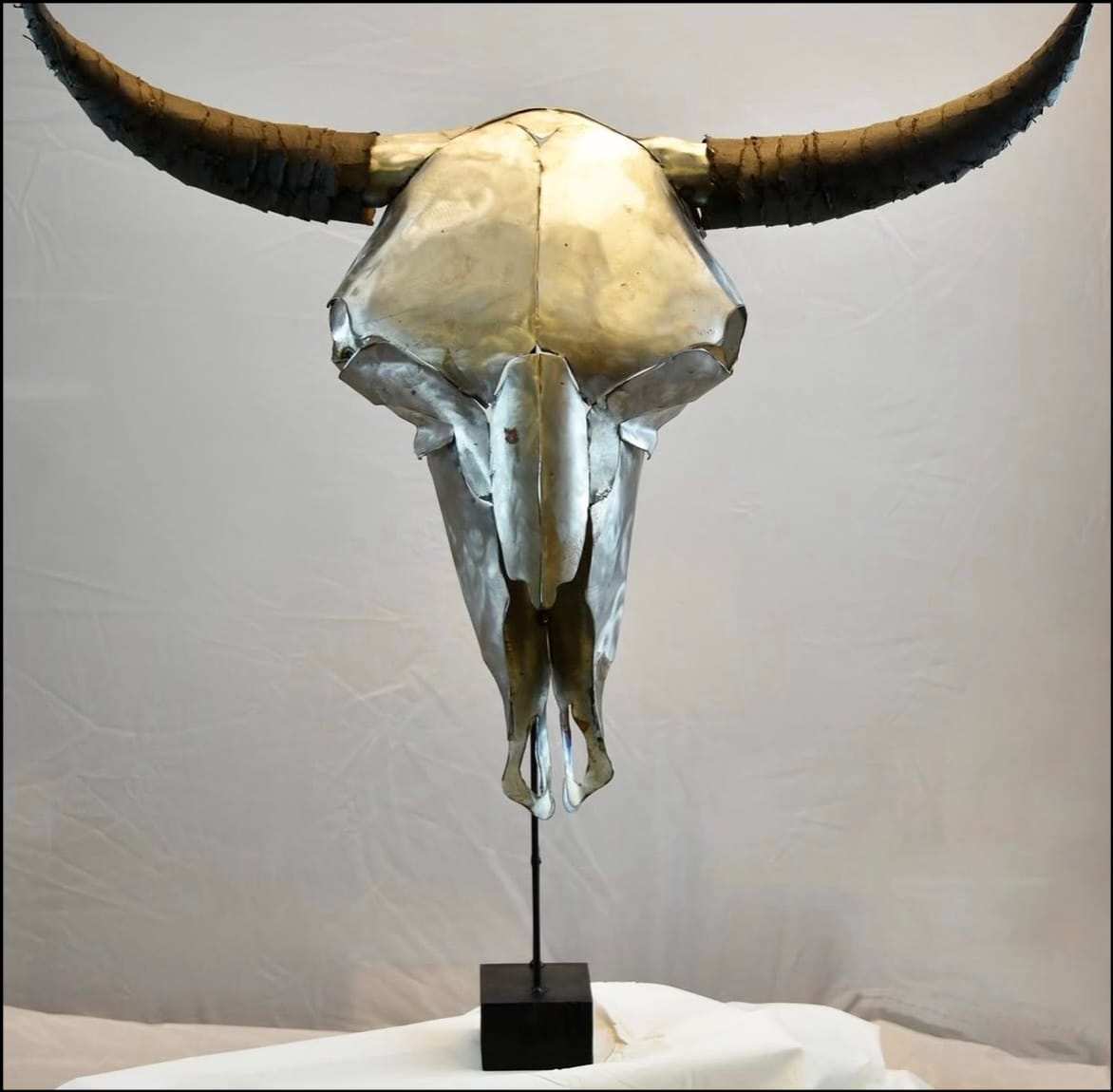
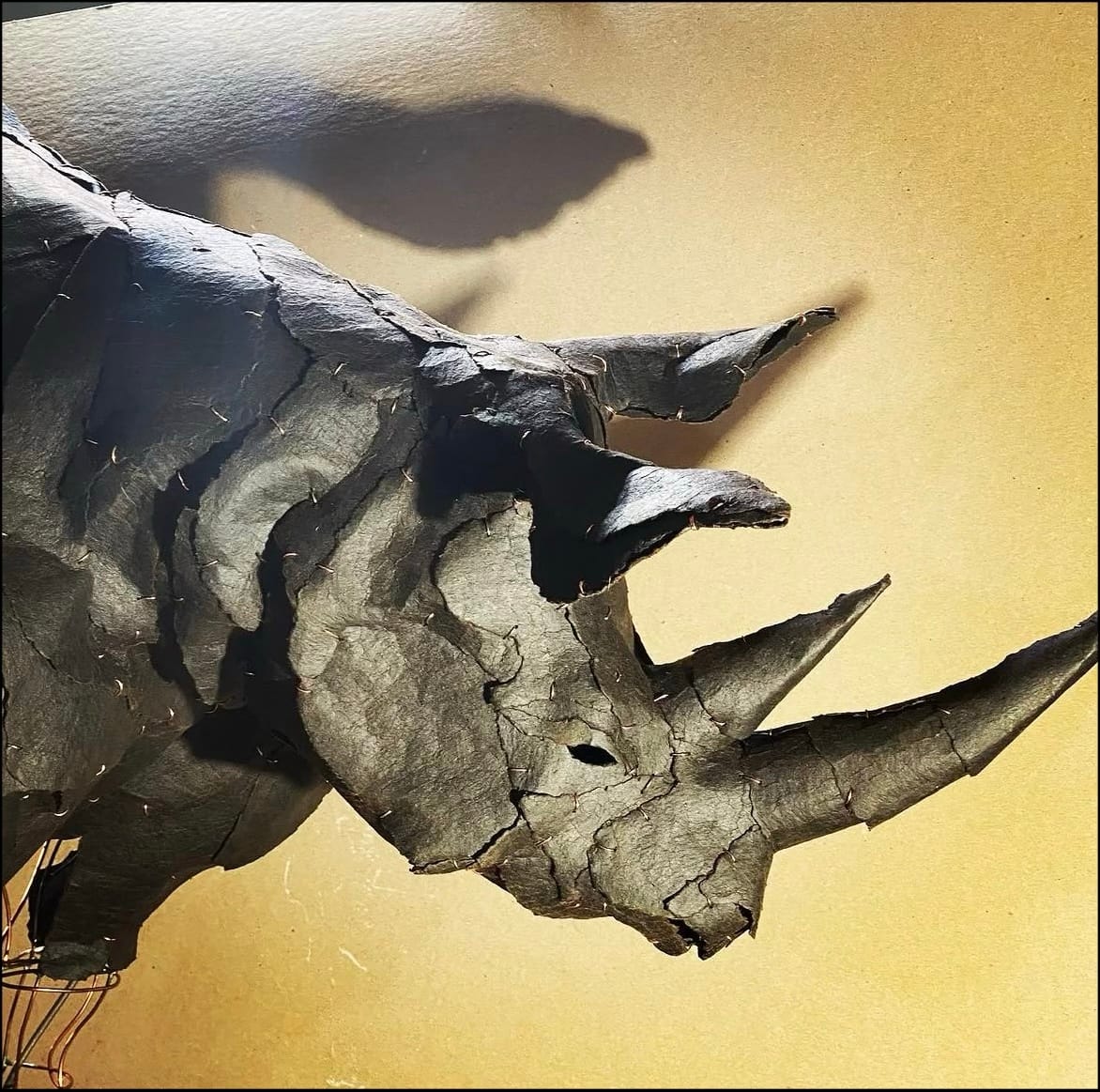
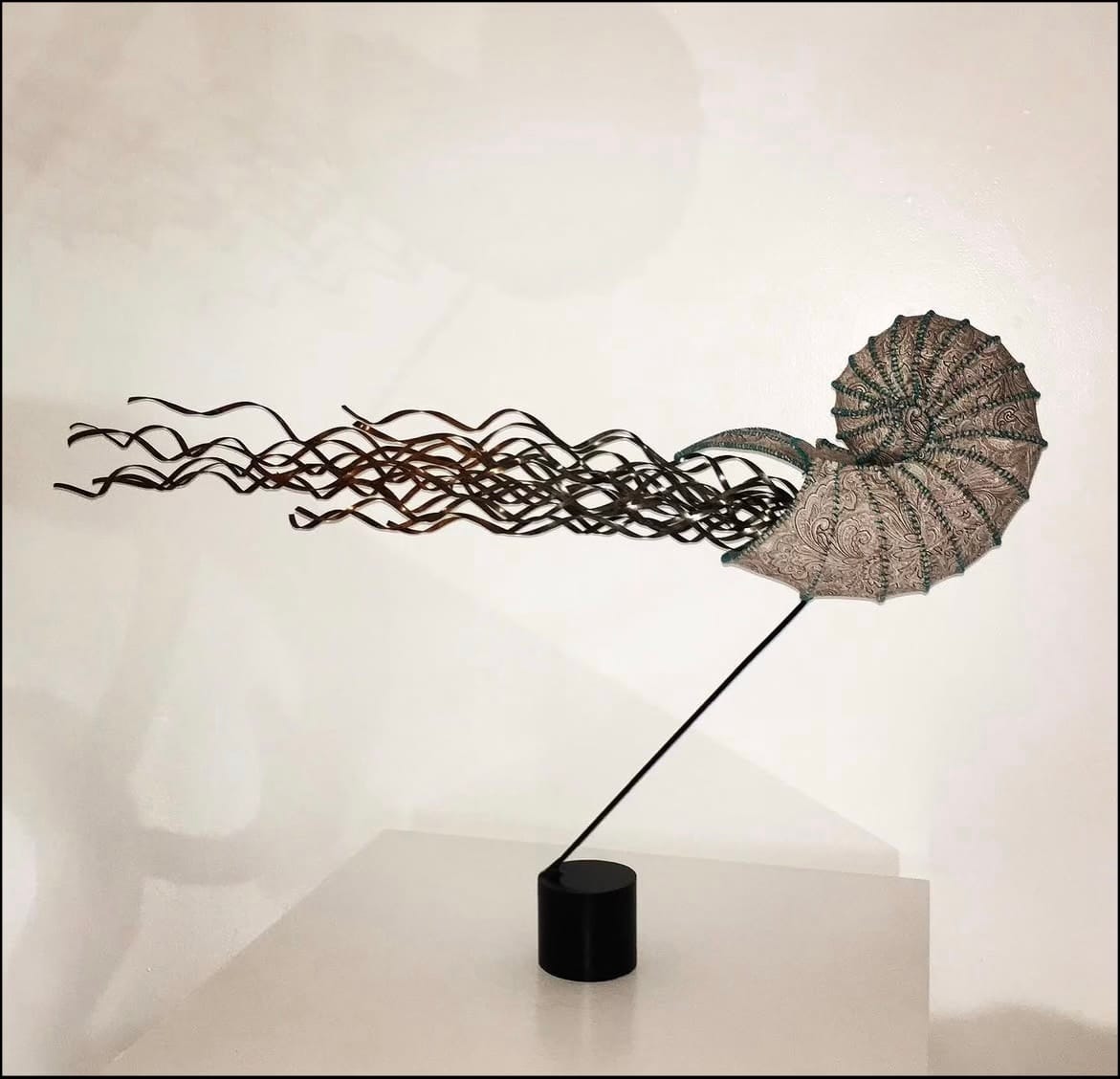
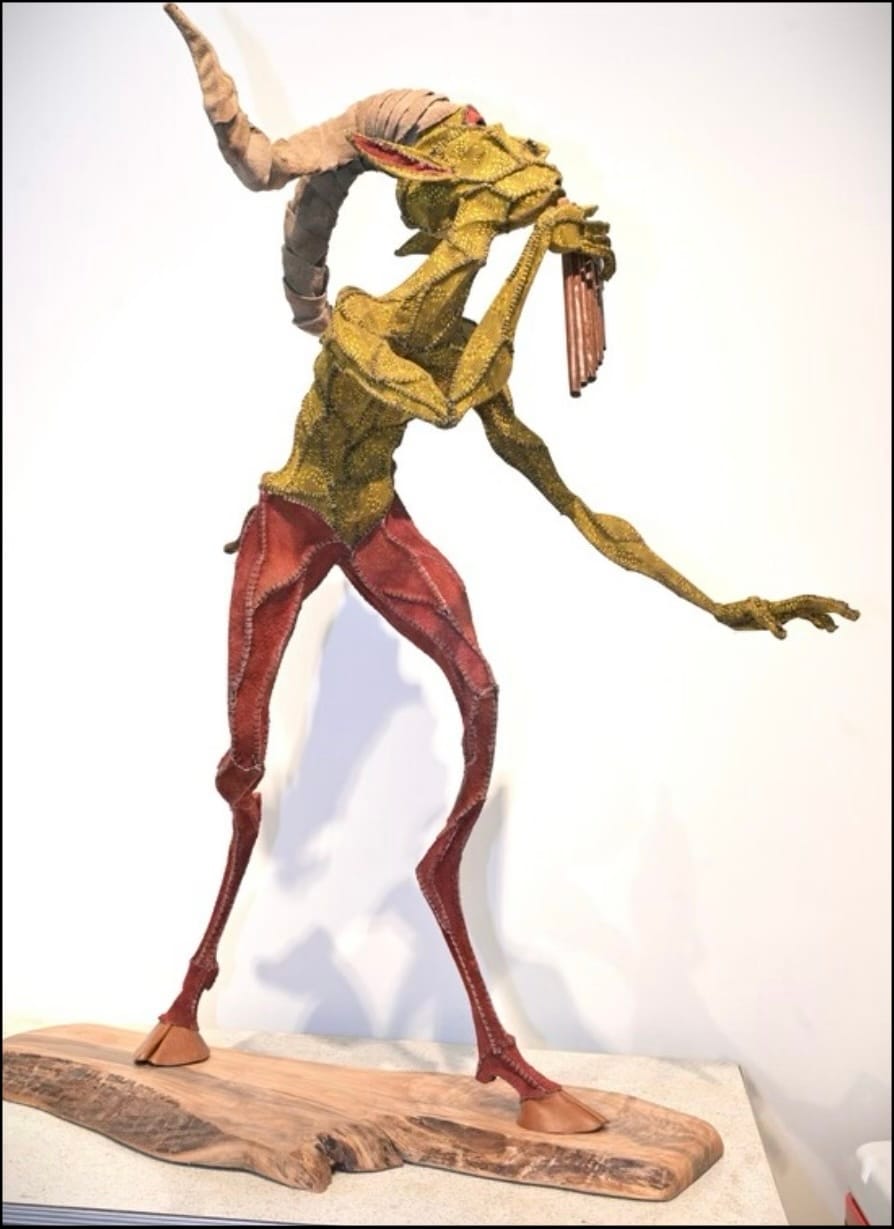
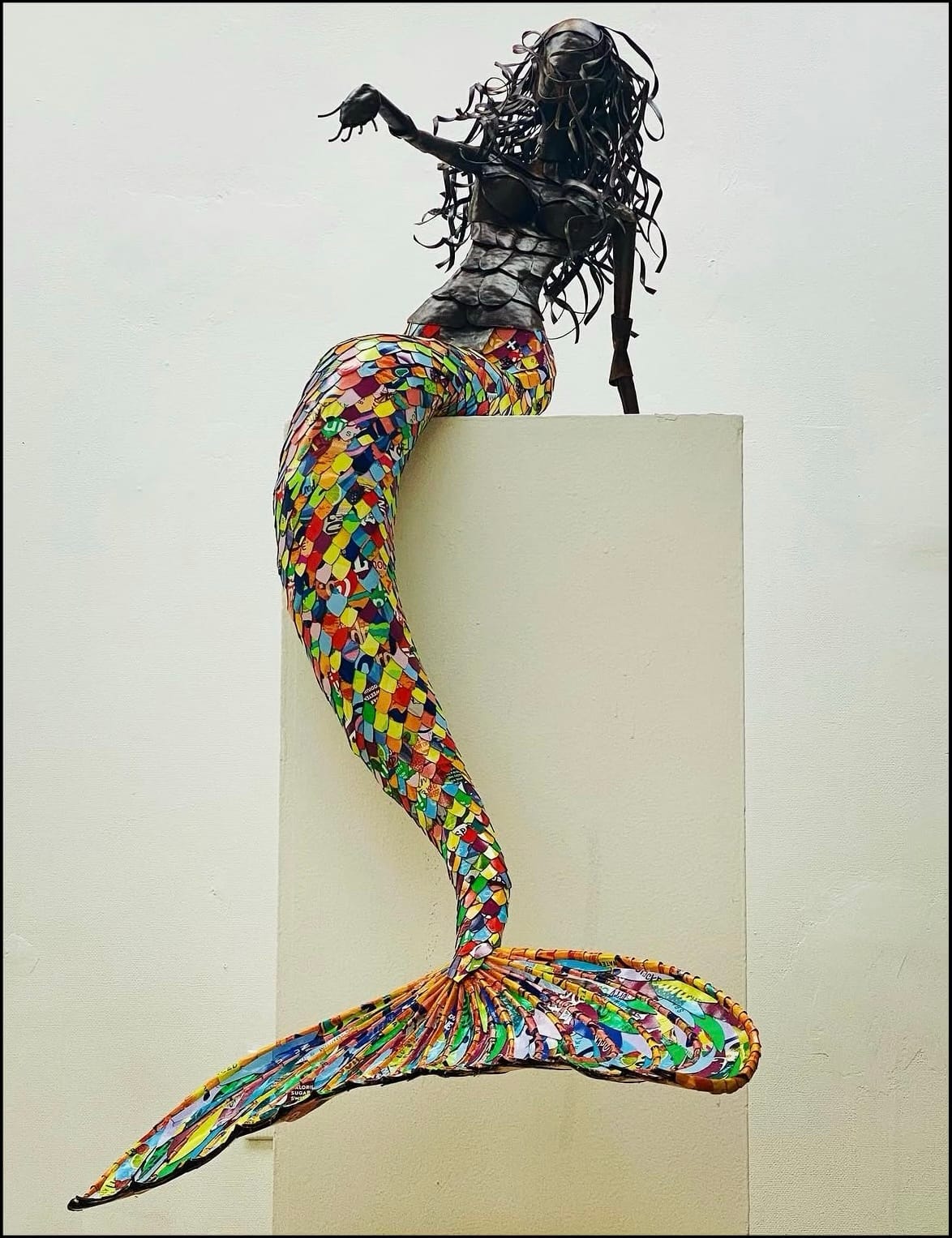
- Manifest Destiny – steel, tarpaper
- The Venerated – steel, tarpaper
- Nautilus 2 – steel, fabric
- Lament for Syrinx – steel, fabric, leather, wood
- Siren Song – steel and cardboard
See more of Wes Casey's work at his online studio.