The OrphanAGE, Vol. 1.19
First Lines
Traveling through the dark I found a deer / dead on the edge of the Wilson River road. —William Stafford, Traveling Through the Dark
We’re gonna get a little K-fookin-S in this issue!
Melvin Litton has (as far as I know) penned seven novels and at least one collection of poetry, hosts a frequent open Americana jam in North Lawrence with Mando Dan — if you’re ever in town on a Sunday night, I'd recommend dropping by; its well worth the time investment!
Meanwhile, the Baron, aka Jason Ryberg, remains hunkered down out in the Mark Twain national forest penning new work at the mind-boggling rate of 1 poem a day. He’s recently been feeling his way around the Japanese form known as a “Tonka” (think haiku +). We’re excited to get a sneak peak of an upcoming release “What the Tall Grass is Whispering About, 100 Tonka”
Peace,
Dante
In this Issue
- Fiction by Melvin Litton
- Poetry by Jason Ryberg
- Music by the Gothic Cowboy and Mando Dan
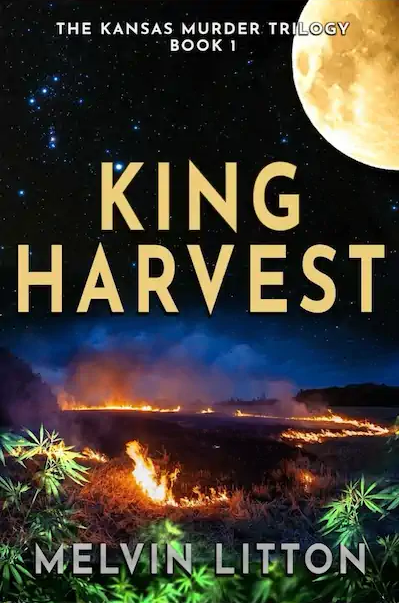
The Boys (excerpt from King Harvest)
by Melvin Litton
The wind had all but died the previous evening when the sun set low in the west, coloring the dust trail blood-pink as Frankie Sage blew into Will’s place with Jack Kelly and Gabe Swenson in tow. The old stone house stood out in the middle of a section of plowed ground surrounded by nothing but a few cedars, the wind, earth, and sky, owned by Ned Furburgh, a true cowboy fated to farm, and hated tractors, plows, combines, the whole works, but farming paid for horses and gave Ned time to hunt deer in Texas and Wyoming, so he’d horse-traded with life so to speak and made the best deal he could. He rented the place to Will for a pittance and pretty much turned a blind eye to the boys and their doings. Along with most folks in those parts, Ned liked the boys, had known them all their lives, had watched them play ball and go to war. Besides, the boys were always respectful and considerate of their own.
As Frankie was wont to advise, “Remember what Jesse said, ‘Keep ’em smiling, fellas, they might be on your jury someday.’”
Of all the boys Frankie was the most jocular, convivial, and cunning. Swarthy, handsome, with piercing brown eyes and thick dark hair that whipped like a stallion’s mane with each jerk of his head—always ready with a quip or laugh, except when in a foul mood or weary of weak-minded chatter, then he could turn vicious and biting, turn his considerable bombast and rancor on whoever or whatever. Drive his point with a slashing hand or stabbing finger, deriding and declaiming like an arch fascist. That’s when they called him “Franco” and he didn’t care one bit if they did.
“You point that finger at me once more,” Will warned, “I’ll bust it off!”
“You try it, big boy. Just try it…”
Frankie and Will had nearly come to blows. Harsh words and gestures filled the room like a dark wind hurled to the far walls and ceiling. Jack, Lee, and Gabe watched from the doorway as the rivals rose from their chairs and cast their shadows above the flickering lamp. Good thing the table stood between them. In the next instant an angry hand clipped the ashtray like a hockey puck. Jack reached out and caught it just before it spilled to the floor. His greater concern was that a coming thrust would send the lamp crashing in a pool of flames. He set the ashtray safely beyond reach and turned a wary eye on the pair, like a horse will its head to size you up.
Jack, who often went by Jacko, had only one good eye. The other was a glass orb embedded in place of the one pierced by a pitchfork when he was a small boy. And right then, witnessing their hot words and quick hands jabbing through light and shadow, he sensed the sharp prong from his father’s errant thrust flash to his eye and feared he might see blood again. Even the glass orb, which usually stared off to another time and place, seemed fixed to the moment.
The argument was this: Frankie wanted to organize the boys in a greater scheme, a more rational scheme that would put more money in everyone’s pocket. It made sense, what he proposed, and Frankie had the grit and daring to captain such a scheme.
Problem was Will had always seen himself as the leader; after all it was Will who helped Frankie kick smack when Frankie first got back from Vietnam in ’69, weighing less than 140 pounds, badly in need of 40 or 50 more to flesh out his six-foot one inch frame. Will took Frankie’s dope and flushed it down the stool, locked him in a room, practically sat on him and made him eat and sleep. Breathed life back into that corpse. In a couple of weeks Frankie roared back, bags under his eyes went from half dollars to dimes, up and striding, full of dash and swagger, ready to whip the world, run guns, seize the prize, talking evolution, revolution, and absolution all in one breath. A full-blown iconoclast. And Hell yes! still liked nose candy, good pot, and could get drunk on two beers any day or night, but steered clear of smack ever since. Owed that much to Will and ever grateful. Actually giving Doc Will a fair listen.
“Jesus H Christ, Frankie! Don’t you make a fine picture of a horse’s ass standing there talking that shit! Acting like the big chief out to wear the big feathers. Ain’t it you who always said we didn’t need a leader? Just two years ago you told me to Fuck off! when I tried to get things rolling.”
“Yes, Will, that’s true. I remember. But that was then, and this is now. Things are different. We’re all different.” Frankie trying to lower the tension, achieve his end, the great heat and argument nearly over. They’d traded a dozen Fuck you's! and kicked their chairs to opposite walls, stood nose to nose like two bulls in a pasture deciding whether to charge or whether the cows were worth the fucking headache. Will’s wife JoAnn, a delicate Bible-raised blonde, was hiding in the kitchen, her hands thrust in dishwater, wondering what she’d married into, wishing they’d lower their voices, raised to be a good wife and fearing she’d be a widow most any minute. But Frankie’s quieter tone chipped away at Will’s hard anger, ever persuasive, soothing old wounds.
“Look Will, we’ve got a sweet deal going. And I want you in on it. I want everyone in on it. All I ask is that you hear me out.”
“I’m all ears, Frankie. Ah-l-ll ears.” Edgy, blunt, keeping his distance.
“Good. Then like I was saying, we…Jack, Gabe, and I have a chance to buy a little place, a hundred ’n forty acres, about fifty miles east, halfway to Manhattan. On over into Clay County. It’s off the main road, secluded, hidden by hedgerows, with a high bluff in back. Sixty acres tillable, the rest creek and pasture. It has a ramshackle house and outbuildings. We made an offer and should know in a couple days. Take possession late next week. It’s perfect. Perfect for drying and keying. We can move stuff through there by the ton and no one to ask by your leave. Gabe has new contacts, says he can sell every leaf cut in Kansas. Jack will stay at the place and keep an eye on things. Get the stuff dried and bagged. I’ll work with the crews back here and on west. Not to be boss or big chief, but simply to keep things moving. We can keep ten to twelve guys busy. Everyone makes money and all you have to do is cut.”
Which sounded sweet, because sitting on the stuff was a pain and made everyone antsy. And selling it was always a risk. Not so much due to the law, though selling was a felony while cutting was a mere misdemeanor—but because selling led to the murkier side of things, to people from other places, people you didn’t know or trust. As Frankie always cautioned, “It’s not the law, it’s our own kind we’ve gotta watch out for.”
None of them carried guns, not in a patch or at any time while working hemp. That only asked for trouble. But when dealing, making a sell, yes, they carried guns. Had to because that’s when you dealt with the other guys and they sure as hell did. Everyone showed their guns as they showed the goods and the money to keep each honest as the trade was made. All part of the game.
“Okay,” said Will, “I’ll think on it. You get that place bought, we’ll see. But I’ll have a few more questions don’t think I won’t.” Still wary, still suspicious, still held a grudge from last year. No sweet deal then. He thought Frankie had tried to rip him off and had said so. Frankie told him where to stick it. Another night they’d shook the rafters. Will still hadn’t put it to rest.
But Lee saw it otherwise. Thought Frankie had done the best he could. A bad year for selling hemp, like any crop, the market always up and down, subject to supply and demand. Frankie attempted to market for several groups of pickers, pooled all the hemp to make one deal. And succeeded, in part. For it was a two-part deal and the second part fell through, cash undelivered. The middleman claimed he’d been robbed, middle of the night: two masked gunmen took cash, stereo, coke and left him hanging like a limp dick caught in a zipper. A likely jive, but he had the look of an easy mark, too slack-jawed and frightened to work a scam. Frankie took him at his word and did what he could, what he thought was best. Split the cash in hand even to all concerned. Will didn’t see it that way, said his dope was part of the first exchange and didn’t get ripped off, so he wanted full payment. Frankie didn’t budge, said the dope was all part of one deal, all shared in the profit, all shared in the loss. No one liked it, not really, getting only half of what was expected. Like seeing wages taxed at 50%. Lee wanted to know who the fool was that got ripped off and lost their money. Frankie told him.
“I know that jerk, seen ’im around. He thinks he’s a painter. Does tie-dye for chrissake. What a frigging goofball. Did it ever cross your mind he might be lying? Might’ve stashed the cash and faked the whole thing?”
“Yes. It crossed my mind. He might have. Who’s to say? But three or four thousand dollars, what’s a life worth, Lee? Would you kill a man for that?”
“Maybe, if I knew he’d ripped me off.”
“Well let’s find out. Let’s go shake him up. Bust a finger or two. Hell, take his car and sell it.” Frankie calling the bluff, plenty willing to do his part, driving the devil’s bargain. Is it worth it? Are you willing? That was his question as he gazed, eyes held steady, unblinking, dark yet lucent, hinting at once of the serpent or a father confessor. You could never tell which. Which made you think.
For a moment Lee thought You damn right!—wanted to hurt the guy bad, for it was dead winter and he was broke, had a wife and son to care for, and self to feed. But no, he had to admit, it didn’t make sense, unseemly even to lay a hand on the fool. Not a road he wished to take. Best take the loss and better luck next time.
There it would have rested, except for Renee, Frankie’s ex-wife. Bitter over the divorce and other women, and failing to wheedle her way back into favor, she went for the jugular. Let it out that Frankie had stiffed them all and kept the money for himself. Dishing up a real witch’s brew and looked the witch as she said it. Lee wasn’t buying it for a minute. Few did. But it caught in Will’s craw and stuck, eating away, the thought, the possibility, because he’d long warned Lee that Frankie was a user.
“I mean it, he’ll use you. I love him like a brother, but he’ll use you, me, anybody.”
Lee listened quietly and kept his own view. Up to a point they all used one another. Sure, Frankie was calculating, but fair-minded and keen to everyone’s interest. His own foremost, as he freely admitted any number of times.
“Look, I ain’t out to fuck myself. I want every penny I can lay my filthy hands on, so help me God!” Raising his hands, laughing, extravagant in word and gesture, perhaps that was his guile, perhaps not. In any case, if he used people, he used them as they let themselves be used. He never pushed, unless pushed. Then he pushed hard.
Will, too, was keen to his own interest. When he felt his interest threatened, he set his stout jaw and turned badger. So they made quite a pair. A caution to watch.
But the storm had passed, both laughing now, off to the kitchen for more coffee. Frankie bantering with JoAnn drying the dishes, got her laughing too. Said, “Why don’t you dump this hardhead and take those long legs dancing with me sometime?”
“In your dreams buster!” She backed him off with a snap of her towel, blushing as she shook her head—Frankie such a tease, unconscionable!—raised to be a good wife, wanted nothing to do with hanky-panky.
Watching them stand down, Gabe gave a low sigh. Hated to see them square off.
“Someday, I swear, they’re gonna kill each other.”
“Just a difference of opinion,” Lee allowed.
While Jack cast that lone eye in doubt.
“Boy, I dunno. More a big difference, I’d say.”
Gabe was still sighing, shaking his head. Overweight, smoked too much, always sighing and wheezing, asthmatic, suffered from hay fever. For Gabe cutting hemp was pure torture. He hated it. The pollen, the rough terrain, stumbling blind in the dark night, swinging a machete near hand and leg, stripping leaves till your fingers bled, and lugging fifty-pound bags of wet hemp a half mile or more to a roadside ditch in wait. Not to mention mosquitoes. He much preferred selling the stuff and was good at it, confident, at ease in his element. Bagging money, that was his gig. He didn’t even mind the guns, at least they didn’t make him sneeze and he hadn’t needed to use one. Yet. He knew they were mostly for show, and that most exchanges, no matter the parties involved, were straightforward and businesslike. As long as everyone got what they wanted, all parted happy. Just avoid the narcs and don’t party till you’re home safe. Clear and clean. A rational approach.
And Gabe liked it that way, a man of reason: a former Hegelian radical turned running-dog capitalist, a hint of Lenin in his wisp of beard, but not in his eyes, no grim ideologue there, for they laughed like old Saint Nick if he was ever young and full of mischief. Gabe was crazy-fun like all the boys—not crazy-mad like certain fellow-travelers in the sixties, dour radicals who had no sense of proportion, no sense of humor, like their nemesis, Nixon. No, Gabe liked his fun writ large, but he was also curious and oddly mystical, ever gnawing at the root of things. Though the true beginning could never be known, that which came before Adam and Eve, all the Precambrian muddle locked in the mud. This was Gabe’s suspicion. But the mystery could be explored and sifted like tobacco rolled and lit by a match, the smoke let to drift forth with thoughts warmed by the flavor, the scent, the dark aroma.
The boys all loved long nights of raw rambling discourse—talk of past and future deeds, of life and why, ideas and arguments spun one to the other as in a thousand-page genesis. All read too many books, stayed up too late, smoked too much dope, and drank too much beer. And when they were flush, had money, they snorted cocaine, which was seldom, but in which there was no moderation, snorted till it was gone, wide-eyed and focused, minds in full glory, conjuring every conflict and wonder known, answering every riddle, cutting to the quick, stirring the air and flames till the dust had settled and their minds were left ragged and tattered like buckshot road signs. Then they passed out, crashed for a day, a night, to wake feeling damned sorry and lowdown. And broke. Pockets emptied out by their own improvident glee.
Frankie was there to put cash in their pockets and spark that glee. Rouse them to the task. A sweet deal for all. And he’d been there from the beginning…
Tonka by Jason Ryberg
Something Larger
The music coming
from the radio in the
corner of the room
mutates the moment into
something larger than its sum.
Short Stories
Cherry-red cop lights
flashing at the heart of an
old, foggy inner-
city cemetery full
of too many short stories
Out Here
Underground rivers
of memory, country grave-
yards of secrets; out
here, the winters are always
old black and white photographs.
Broke Down and Thumb Out
There I was again:
broke down and thumb out in the
middle of a bad
dream of wind and thunder and
the roar of diesel big rigs.
Marijuana Fields - Gothic Cowboy (aka. Melvin Litton) & Mando Dan