The OrphanAGE, Vol 1.09
First Lines
It’s not easy to cut through a human head with a hacksaw. ~Michael Crichton, Travels
Where does art dwell? For some it's the clean, coiffed, climate control of a museum. Others, the genteel engagement of a coffee shop busk. Other’s still, draw pleasure amidst the polite applause of a poetry open mic. Yet, for some, art is pried like a wad of chewed gum from beneath a bus stop bench. Disjointed. Unpasteurized. Bile-yellow and screaming.
This issue may present our most challenging edition so far. For the hell of it, I think I may just call issue 1.09 our Punk issue. Its got edge. It may make you feel off-kilter. It will certainly leave a mark. To provide a little context we are going to reprint an excerpt from our interview with L Ron Drunkard of Red Kate and Black Site Records discussing the nature of Punk Itself.
Peace,
Dante
In This Issue
- Experimental audio-visual from Jim McGowin
- 3 music videos from John Bersuch’s Bacon Shoe and Minds Under Cover
- Visual art from Dave Lackey
- Interview with L. Ron Drunkard
Jim McGowin
Ambient. Avant-Garde. Often elegant, and always captivating. The artistic frontiers of audio-visual experimentation have a live wire in the work of St. Louis’ Jim McGowin. We offer two for your ASMR engagement. McGowin’s poetry is available at Spartan Press.
A Landscape of Synaptic Plasticity
Unusual Home Movies with Cellos But Not Really
John Bersuch
Scary Monster era Bowie? John Zorn? Nick Cave? Nope… the dissonant often atonal riffs of Bersuch's Baconshoe and Minds Under Cover incarnations grind and mash alongside disturbing found video montages, gliding like long-used motor oil across the tongue. We suggest that you hurry over to your YouTube interface and create a playlist —but only after punching a bunch of likes.
Cest, Baconshoe
My Whole World, Baconshoe
Black Tongue, Minds Under Cover
L. Ron Drunkard
We’re here with L. Ron Drunkard, aka Shawn Saving of the Black Site record label cooperative and the band Red Kate. Joining us is poet and publisher Jason Ryberg to talk a little music, a little rabble rousing. Thanks to John Scott and the Black Dolphin for the space to chat, and to our tech crew: Danny & Riley down in the basement somewhere.
Orphan: A few months back I saw some graffiti on an underpass declaring: Punk is Dad. As someone who used to be something of a punk myself, what does it mean to be punk these days?
LRD: My def is going to vary from someone who’s, you know, twenty-two, but I think the universal thing about punk is attitude. Take no bullshit. Be true to yourself. DIY.
Remember that Simpson’s episode where everybody starts acting like Bart? Bart’s like: Man, this is no fun. I’m not a rebel anymore… External things that embodied punk are now sort of commonplace: Crazy haircuts. Tats. Clothes. There’s no ‘normal’ anymore…. Think about it: Punk won!
Hell, Elon Musk would probably think he’s punk, now.
Orphan: Well, he is a bit of a punk (laughter)
LDR: What’s establishment. What’s not. It’s all much more subtle now. Though things may be slipping backward with this fucking administration…. Still, it’s more about power and money and whiteness.
…
JR: I saw a couple memes recently. Henry Rollins, Ian Mackaye all grey and weathered, saying: Punk isn’t dead. It just goes to bed at a reasonable hour. (Laughter)
LDR: I think there were two branches of punk. One was more political, socio-economic. It was anti-consumerist, anti-capitalist, to a degree. I was attracted to that because people were speaking truth. Singing about things that are important. But there was another section of punk that came from the outcasts. It was where all the freaks gathered. Less political. Just having fun, trying to find people who’re not going to judge you for being weird. A lot of gay and trans kids – they weren’t always accepted as well as they should have been, but they were accepted a hell of a lot more than they were in mainstream society. Punk rock has always been a reactionary force.
NOTE: To hear the interview in its entirety, follow the QR code, this link, or pick up your own copy of the print zine at Prospero’s.

Dave Lackey
A generational mainstay along the finest of KC’s 39th Street watering holes, Lackey has slung drinks for a couple decades. A family man with a peculiar ear for music and a penchant for collecting pop culture paraphernalia, Lackey currently can be found behind the bar at Our House (be sure to tip those service peeps, kids!). In his off-hours Lackey pursues a street art of a darker aesthetic.
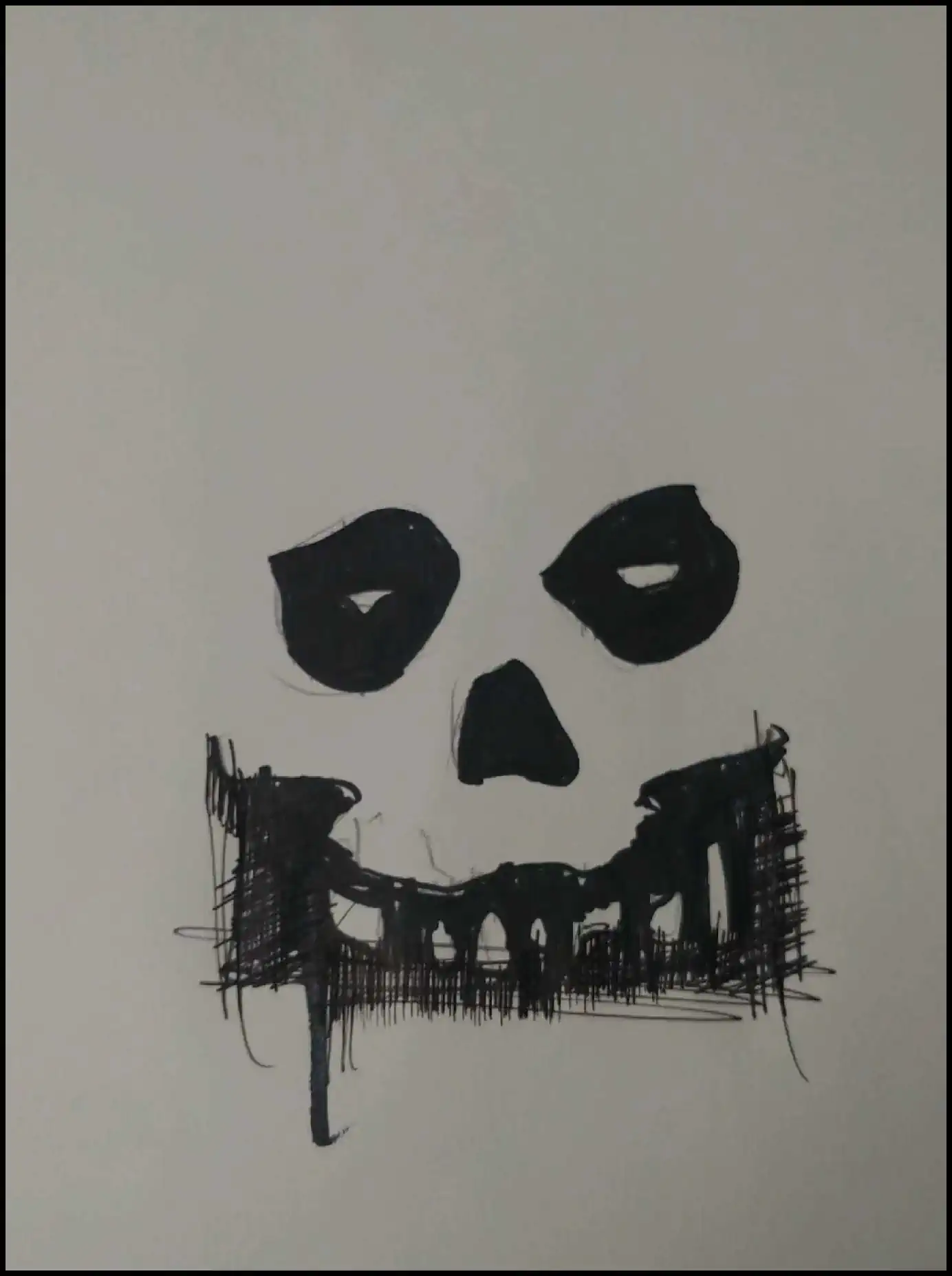
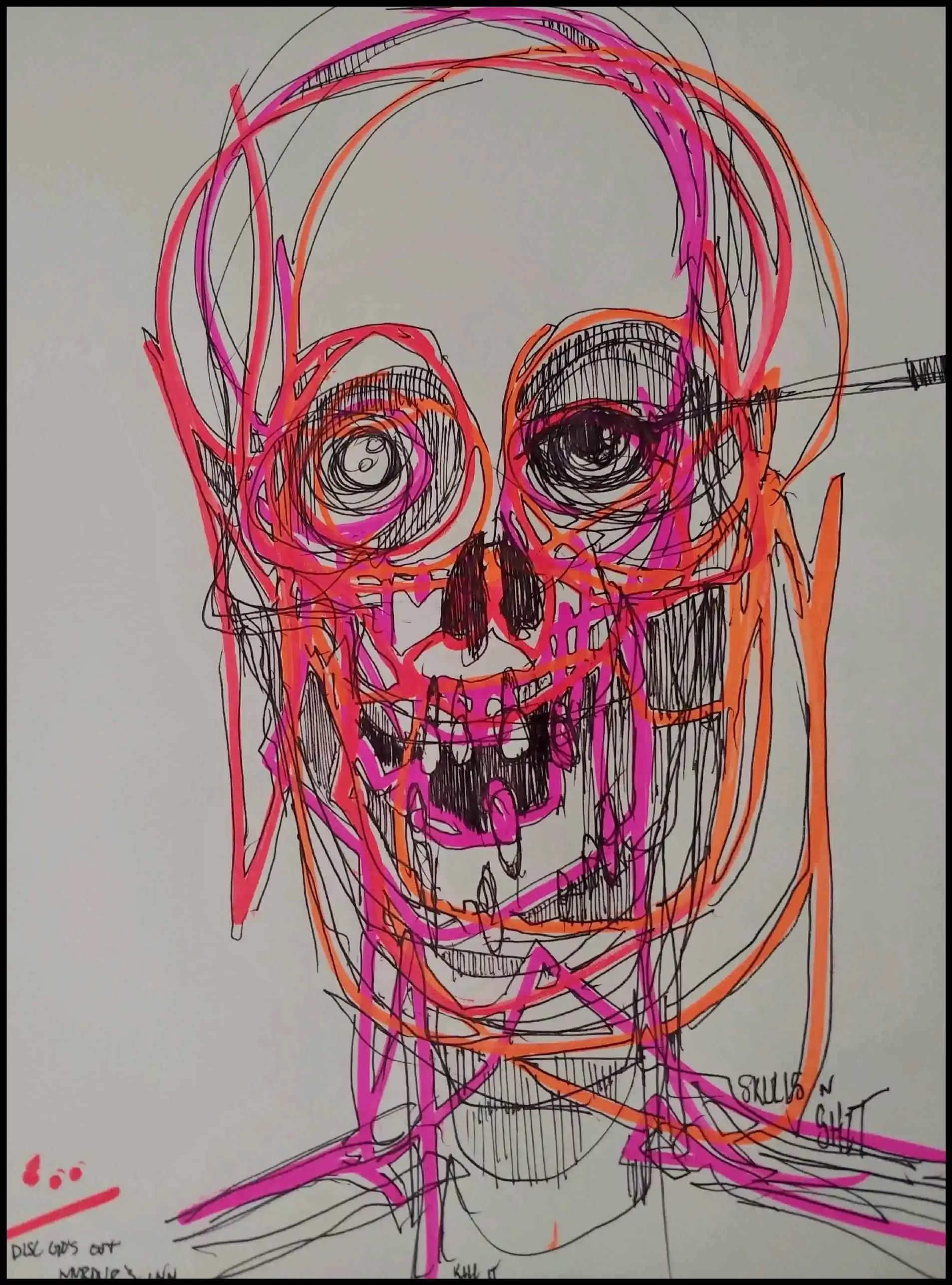
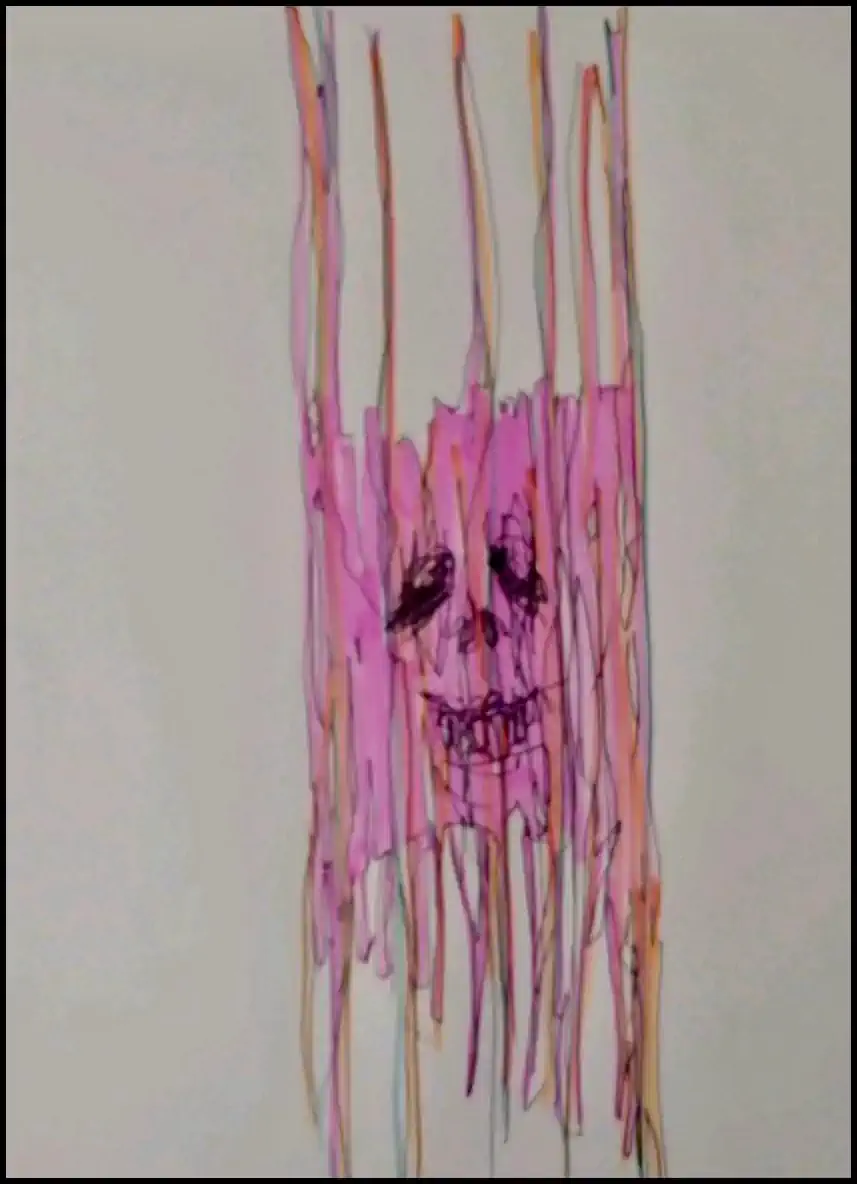
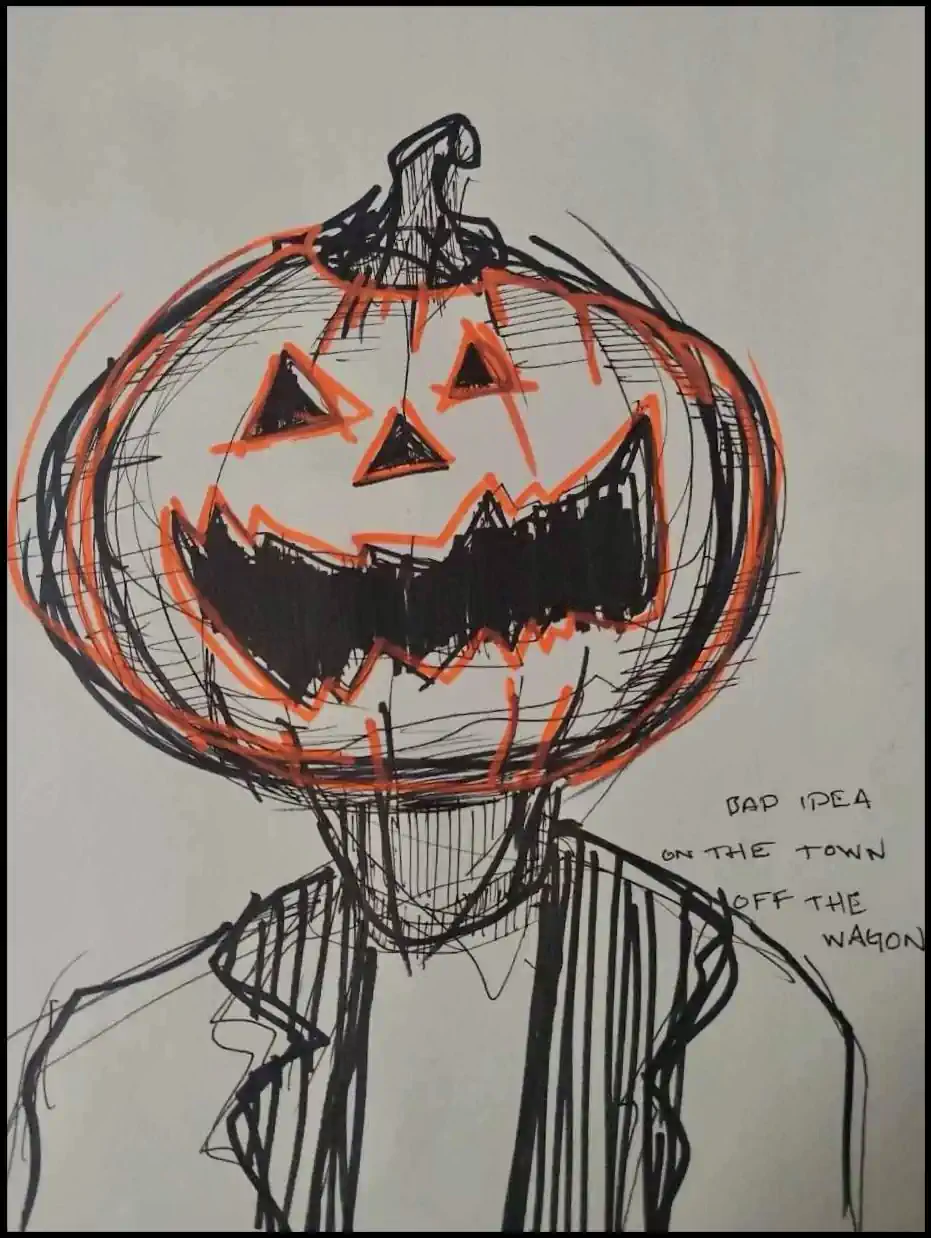
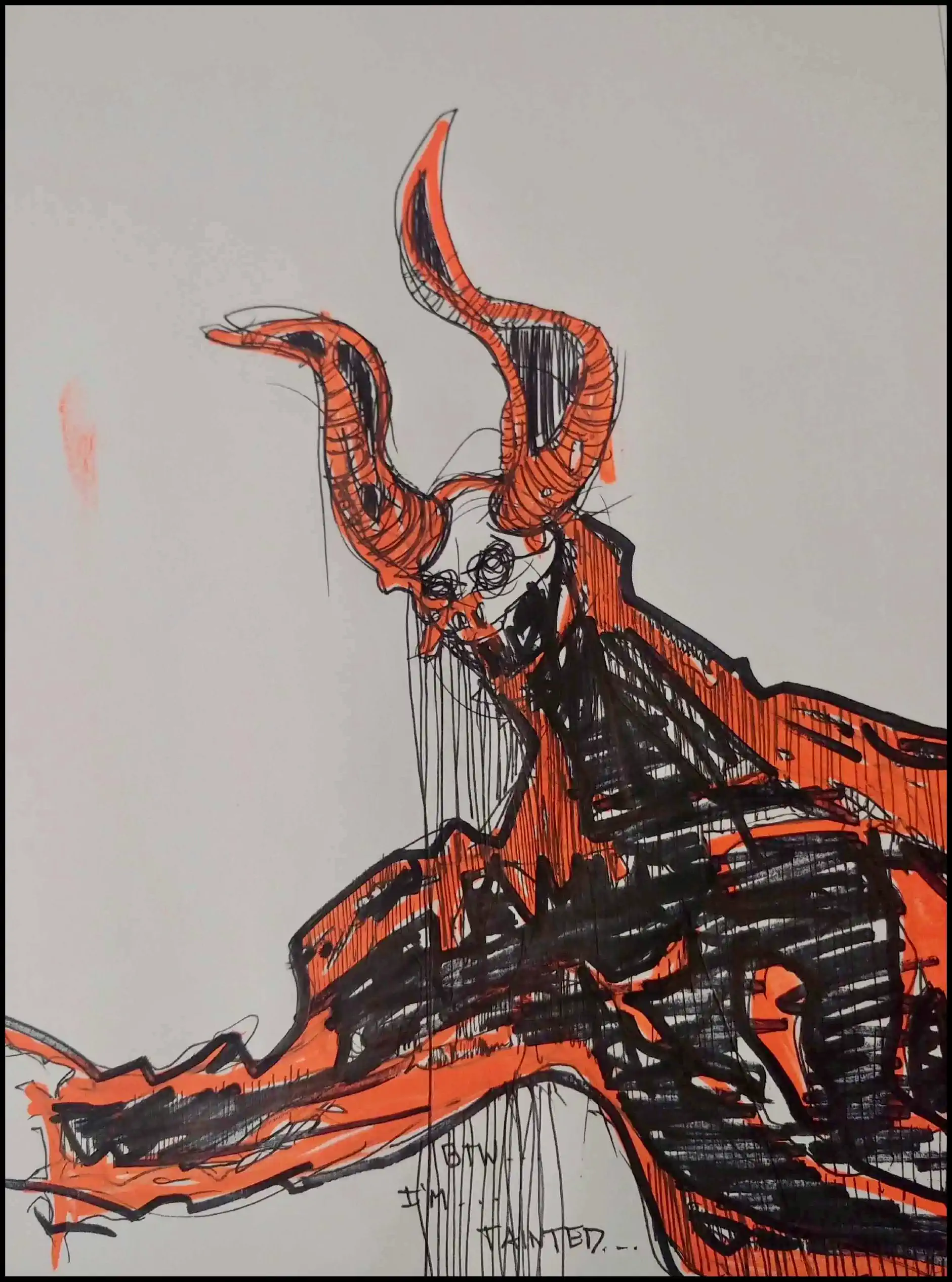
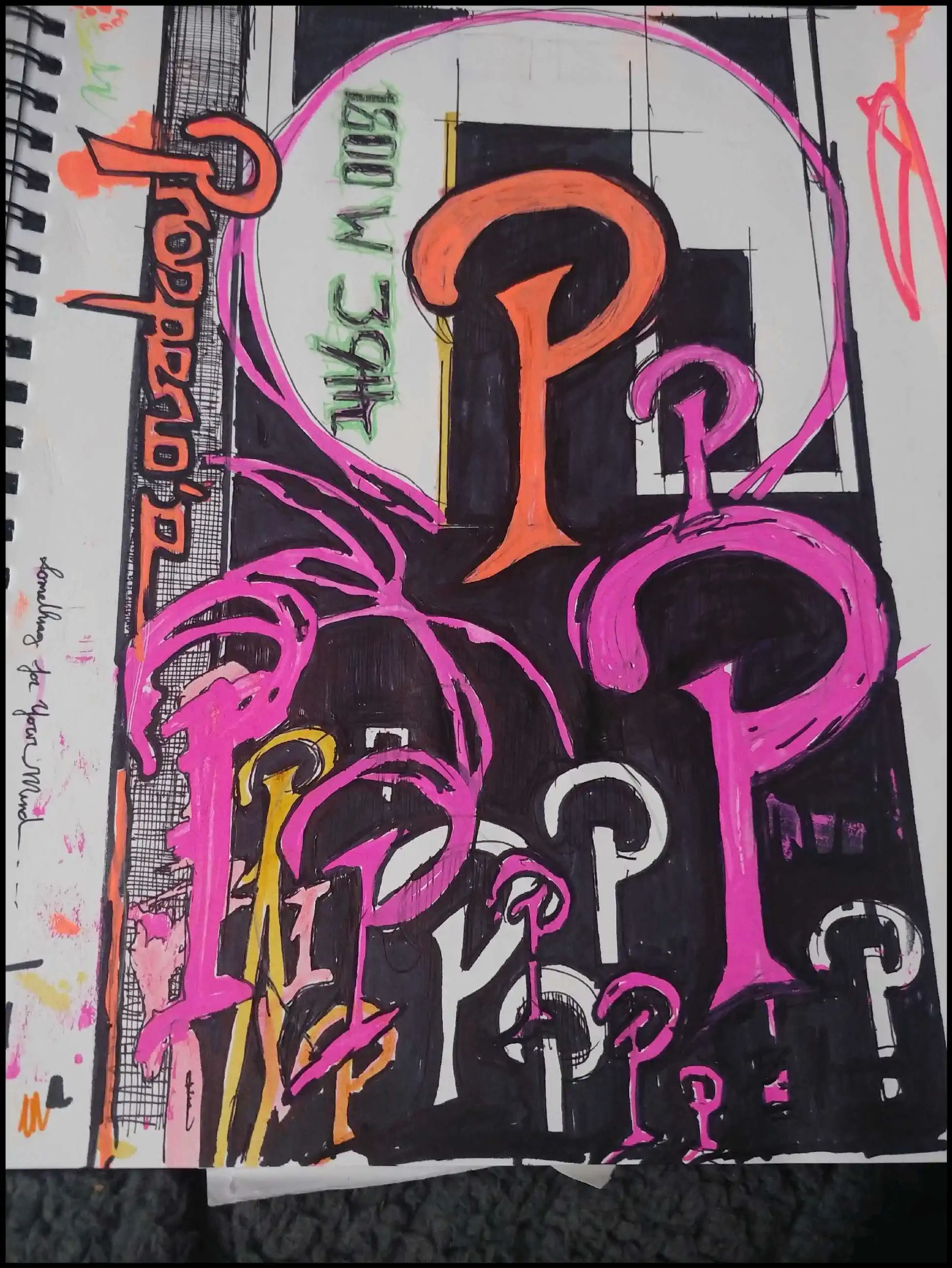
Street Art by Dave Lackey
The Big Quiz
- What is it a landscape of?
- Name one of John Bersuch's musical incarnations?
- What did the graffiti declare about the status of Punk?
- Where does Dave Lackey currently tend bar?